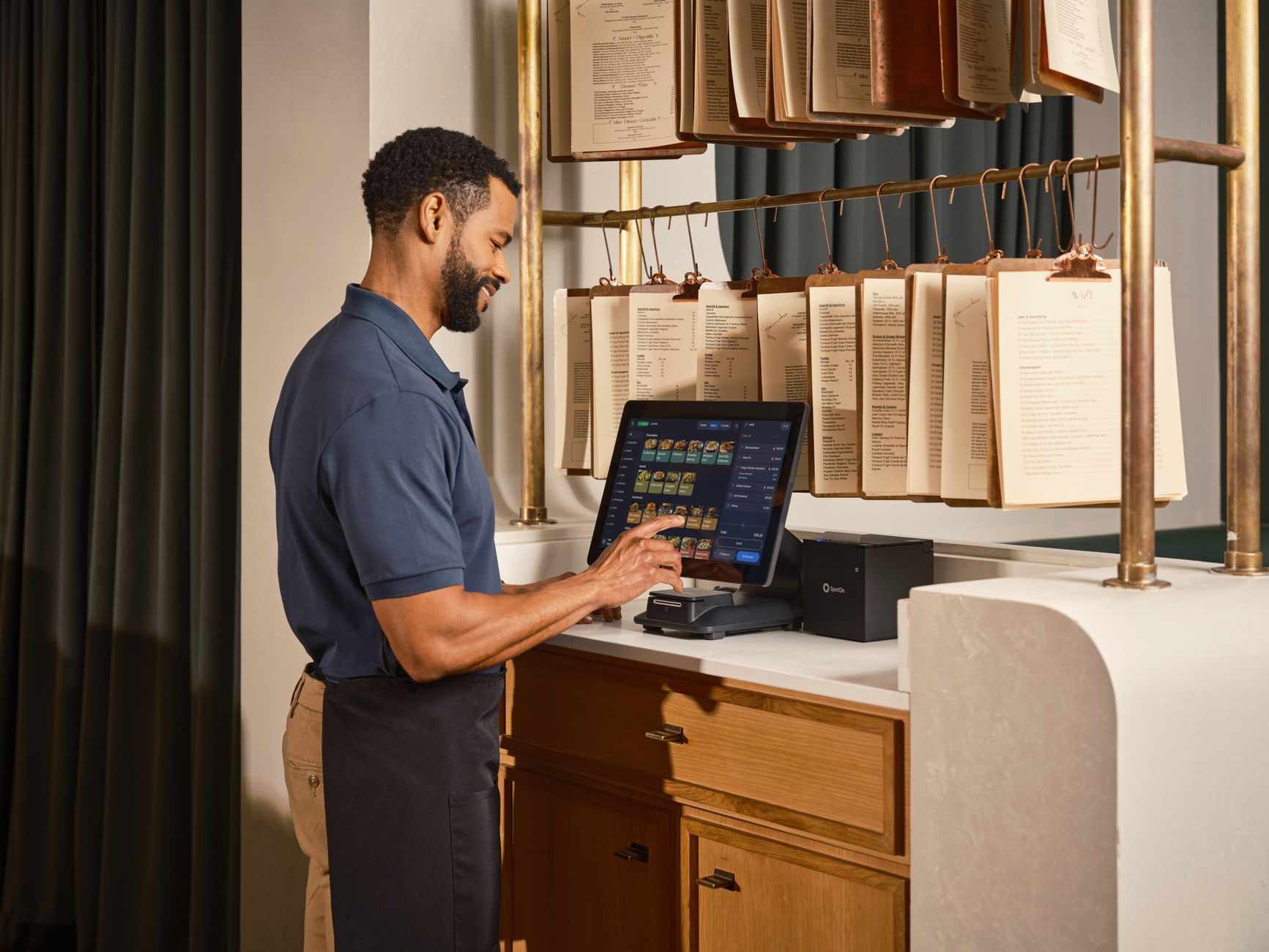
Marcus had just landed his first three clients when the problem hit him: they kept calling his personal cell, texting him at midnight, and leaving voicemails he’d never check. He looked into traditional business phone systems and got a quote for $800 in hardware, plus a $200 installation fee. He closed the browser tab and went back to answering calls with “um, hi, this is Marcus.”
You don’t need a closet full of desk phones, a PBX box, or a dedicated IT person to run a professional phone operation. Cloud-based VoIP platforms give you a real business number, call routing, voicemail, and team features — all from your laptop or smartphone. Every option on this list is an affordable business phone system no hardware required, starting under $20/user/month.
Here are the six best options available right now.
1. OpenPhone — Best Overall for Small Teams
OpenPhone was built specifically for startups and small businesses that want a professional phone presence without the enterprise baggage. You get a dedicated US or Canadian business number that works entirely through an app on your phone or desktop.
Plans start at $15/user/month, which includes unlimited calling and texting within the US and Canada, voicemail transcription, and basic call routing. The interface is clean, modern, and fast — you can be up and running in under ten minutes.
What makes it stand out
- Shared inboxes: Your whole team can see and respond to business texts from one number, so no call or message slips through the cracks
- Auto-replies and snippets: Set up automated responses for missed calls or after-hours texts
- CRM integrations: Connects with HubSpot, Salesforce, and Zapier without needing expensive middleware
- Call recording: Available on all plans — uncommon at this price point
OpenPhone is the right pick for a freelancer who needs to separate personal and work life, or a startup team of 2–10 people that needs a shared phone solution built to scale with them.
2. Grasshopper — Best for Solo Freelancers Who Need a Pro Image
 Foto: Gera Cejas
Grasshopper takes a different approach: instead of replacing your existing phone number, it layers a virtual business number on top of it. Calls hit your Grasshopper number and get forwarded to your personal phone. No new device, no extra app to remember to check.
Plans start at $14/month for a solo operator (one number, three extensions). The Solo Plus plan at $25/month adds unlimited extensions and pays for itself the moment you bring on a second person.
What Grasshopper does exceptionally well is professional call handling. You get a customizable greeting, auto-attendant menus (“Press 1 for sales, press 2 for support”), and voicemail transcription delivered to your email. Clients hear a real business, not a personal cell number.
Where Grasshopper falls short
The limitations are real: no desktop SMS, no team collaboration features, no video calling. It’s a call-forwarding and number management tool, not a full communications platform. If you need SMS campaigns or internal team messaging, look at OpenPhone or Dialpad instead. But for a solo consultant, coach, or freelancer who wants calls handled professionally? Hard to beat at this price.
3. Google Voice for Business — Best for Google Workspace Users
If your business already runs on Google Workspace — Gmail, Docs, Calendar — Google Voice is the path of least resistance. It plugs directly into your existing Google account and costs $10/user/month on the Starter plan, making it the cheapest option on this list.
You get a real phone number, unlimited domestic calls and texts, voicemail transcription, and full integration with Google Meet and Calendar. Call logs sync to your Gmail. Scheduling a call from a calendar invite? Voice handles the notification automatically.
The honest tradeoffs
Google Voice is deliberately lightweight. No advanced call routing, no CRM integrations, no SMS automation. The Starter plan caps at 10 users, and the interface is functional but dated — it hasn’t changed meaningfully in years.
That said, if you’re a small team that lives inside Google’s ecosystem and needs a business number without added complexity, Voice is the most frictionless option available. Setup takes five minutes, and the learning curve is essentially zero because it looks exactly like Gmail.
4. Dialpad — Best for AI-Powered Features
 Foto: kaboompics
Dialpad’s Standard plan starts at $15/user/month and ships with built-in AI that transcribes calls in real time, surfaces action items after meetings, and tracks sentiment across customer conversations. These aren’t marketing bullet points — for anyone running frequent sales calls or managing a small support team, the transcription alone saves 30–45 minutes a day by eliminating manual note-taking.
What you get beyond the AI
- Unlimited calling in the US and Canada
- Video meetings built in (up to 10 participants on Standard)
- Business SMS and MMS
- Call routing and IVR (interactive voice response)
- Integrations with Salesforce, HubSpot, Slack, and Zendesk
Dialpad sits at a useful middle ground: more capable than entry-level tools like Grasshopper, less overwhelming than enterprise platforms like RingCentral. The mobile and desktop apps are well-designed, fast, and reliable. If you spend more than two hours a day on calls, the AI features justify the price on their own.
5. RingCentral MVP Essentials — Best for Growing Teams That Need Everything in One Place
RingCentral dominates the cloud phone market — more than 400,000 businesses use it — and the Essentials plan at $19.99/user/month gives small businesses access to that infrastructure without enterprise-tier pricing.
You get unlimited domestic calls, business SMS, voicemail-to-email, call logs, and support for up to 20 users. The system handles complex call routing — holiday schedules, department menus, overflow rules — that simpler tools can’t touch.
When RingCentral makes sense
If your team is growing past five people, or you’re in real estate, healthcare, or professional services where call handling complexity matters, RingCentral’s infrastructure earns its cost. Key features:
- 99.999% uptime SLA — five nines reliability that matters when a missed call is a missed deal
- Call analytics dashboard — see call volume by rep, average handle time, and where leads drop off
- HIPAA-eligible configuration — with a signed BAA, which healthcare businesses require
- 300+ integrations — connects with nearly every CRM, helpdesk, and productivity tool on the market
The tradeoff is complexity. RingCentral has a steeper learning curve than OpenPhone or Google Voice, and upsell pressure toward higher-tier plans is persistent. But for a team of 8–20 people who need a phone system that won’t require migration in six months, it’s the right long-term investment.
6. Nextiva — Best for Customer-Facing Businesses

Nextiva’s Essential plan starts at $18.95/user/month with annual billing, and the value density is high — voice, video, messaging, and basic contact center features all in one platform. You’re not stitching together separate tools for calls, follow-ups, and team communication.
Nextiva’s strongest selling points
- Unlimited calling, texting, and faxing (still relevant in legal, insurance, and healthcare)
- Free local and toll-free number included with every account
- Call pop feature — surfaces customer info and conversation history the moment a call comes in, before you say a word
- Consistent award-winning support — Nextiva regularly tops third-party satisfaction rankings, which matters when something breaks mid-business-day
- Mobile app reliability — the app maintains call quality even on degraded connections
Nextiva is particularly strong for businesses in home services, legal, insurance, or any field managing ongoing client relationships at volume. The call pop alone makes every team member sound more prepared on every call — no scrambling for context while the client is already talking.
Which One Should You Actually Choose?
Here’s a fast decision framework based on your situation:
| Your situation | Best pick |
|---|---|
| Solo freelancer, just need a pro number | Grasshopper |
| Small team already on Google Workspace | Google Voice |
| Startup team of 2–10, want modern UX | OpenPhone |
| Frequent sales calls, want AI transcription | Dialpad |
| Growing team (10–20 people), need reliability | RingCentral Essentials |
| Customer-facing business, high call volume | Nextiva |
All six options require zero hardware. You can be live on a professional business number today, from your existing phone or laptop, for less than $20/month per user.
Frequently Asked Questions

Can I keep my existing business number when switching to a cloud phone system?
Yes — all six platforms support number porting, which transfers your current business number to the new provider. The process typically takes 1–3 business days and requires a LOA (Letter of Authorization) from your current carrier. During the port, you can activate a temporary number to avoid missed calls.
Do I need a strong internet connection for these systems to work reliably?
Stable, not fast. VoIP calls use roughly 100 kbps of bandwidth per call — a standard broadband or 4G LTE connection handles it without issue. Problems tend to show up on poor WiFi or mobile dead zones. Most platforms prioritize call quality automatically, reducing bandwidth before dropping the connection entirely.
Are cloud phone systems HIPAA-compliant for healthcare use?
Some are, some aren’t. RingCentral and Nextiva both offer HIPAA-eligible configurations with Business Associate Agreements (BAAs). Google Voice, Grasshopper, and OpenPhone are not HIPAA-compliant — don’t use them for protected health information. Dialpad offers HIPAA compliance on its Pro and Enterprise plans. Confirm BAA availability directly with the provider before handling patient data.
Summary: Top Picks by Category
- Best overall value: OpenPhone — modern, collaborative, affordable at $15/user/month
- Best for solopreneurs: Grasshopper — simple, professional, zero learning curve
- Best budget option: Google Voice — $10/month, frictionless for Google Workspace users
- Best AI features: Dialpad — real-time transcription that cuts note-taking time in half
- Best for scaling teams: RingCentral — enterprise-grade infrastructure at SMB prices
- Best for customer service: Nextiva — unified platform with call pop and superior support
3 Key Takeaways
 Foto: This And No Internet 25
- Hardware is optional, not required. Every modern business phone system runs entirely in the cloud — your smartphone and laptop are sufficient for a professional phone operation.
- Price doesn’t determine quality. Google Voice at $10/month handles basic needs well. OpenPhone at $15/month handles team needs well. You’re paying for features, not infrastructure.
- Start with today’s needs, not tomorrow’s hypotheticals. Every platform here lets you add users, numbers, and features as your business grows. The right plan is the one that fits now, not the one you might need in two years.
Ready to cut the cord on desk phones? OpenPhone offers a 7-day free trial with no credit card required — spin up a number in five minutes and see how a real business phone should work.
Frequently Asked Questions
What hardware do you need for an affordable business phone system?
You don’t need a closet full of desk phones, a PBX box, or dedicated IT staff. Cloud-based VoIP platforms provide everything from your laptop or smartphone.
How much does OpenPhone cost to get started?
Plans start at $15/user/month, which includes unlimited calling and texting within the US and Canada, voicemail transcription, and basic call routing.
Can your entire team share one business phone number?
Yes. With shared inboxes, your whole team can see and respond to business texts from one number, ensuring no calls or messages slip through the cracks.