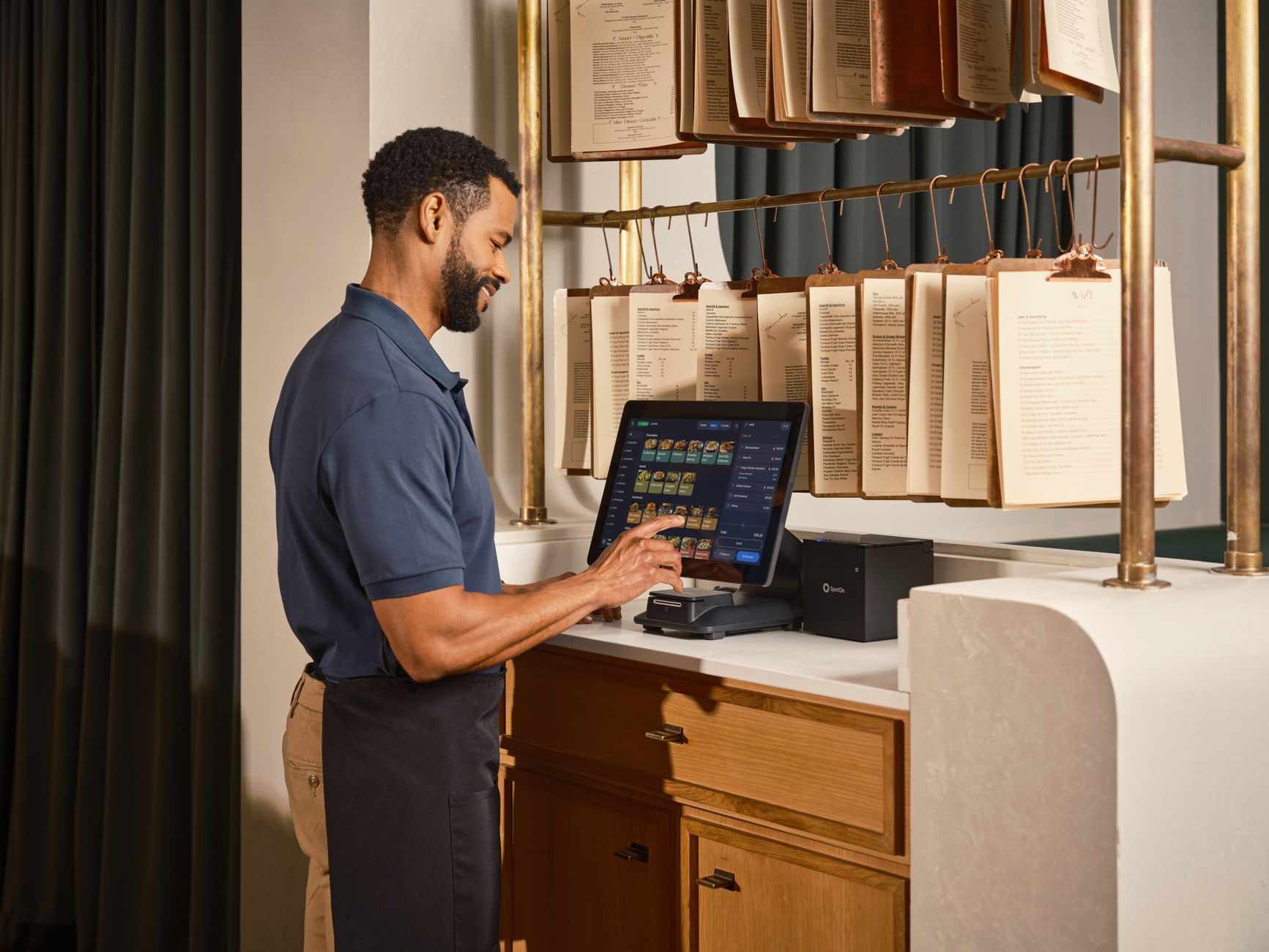
Sarah ran a thriving massage therapy practice out of a converted studio space. She had 18 clients a week, glowing reviews, and a growing waitlist. She also spent 4–6 hours every month chasing unpaid invoices, texting clients who “forgot” to bring their card, and manually reconciling payments with her booking calendar. Then one Tuesday, a no-show cost her $120 she never recovered.
If that sounds familiar, you’re leaving real money on the table — and burning time you don’t have. Automating appointment payment collection isn’t a luxury for big companies. It’s a straightforward fix that pays for itself in the first week.
⚡ TL;DR
- Collect payment at booking, not after — it eliminates most no-shows and invoice chasing overnight.
- Tools like Square Appointments, Acuity Scheduling, and Stripe + Calendly handle this end-to-end without code.
- Combine automated reminders + card-on-file policies to close the final 10–15% of payment gaps.
1. Require Payment at the Time of Booking
The single most effective thing you can do is stop treating payment as a follow-up task. When clients book an appointment, that’s the highest-intent moment — they’re ready to commit. Capture it right there.
Most modern scheduling tools let you enable “payment required to confirm booking.” The client fills in their card details, the appointment locks in, and you never have to send a payment request afterward. No awkward follow-ups. No outstanding balances sitting in a spreadsheet.
This also pre-qualifies your clients. Someone who books and pays is infinitely more likely to show up than someone who just put their name on a calendar. Service businesses that require upfront deposits report 50–67% fewer no-shows — a number that holds consistently across wellness, consulting, and coaching niches.
Tools that support upfront payment collection
- Acuity Scheduling — built-in Stripe/Square integration, supports deposits or full payment; plans start at $20/month
- Calendly + Stripe — natively collects payment at booking on paid plans ($12+/month); zero additional setup if you’re already on Stripe
- Square Appointments — tight hardware/software integration, great for in-person businesses; free for solo operators, $29/month for teams
- HoneyBook — ideal for creatives and consultants who bundle booking + contracts + invoicing; $19/month starter plan
Pick one that matches your existing tech stack. If you’re already on Stripe, Calendly is a natural fit. If you take in-person payments, Square does both. Switching payment processors mid-stream creates unnecessary migration work — build around what you already use.
2. Set Up Automated Payment Reminders
 Foto: RDNE Stock project
Even with upfront payment enabled, some workflows involve deposits, net-terms invoices, or repeat clients on account. For those, automated reminders are your next best defense against late payments.
The key is timing. A reminder sent 24 hours before an appointment is useful. One sent 30 days after the fact feels like a collections notice. Most payment tools let you configure reminder sequences — set them once, forget them forever.
What a good reminder sequence looks like
A three-touch sequence works well for most service businesses:
- Confirmation + invoice link — immediately after booking
- Reminder + payment due — 48 hours before the appointment
- Final nudge — morning of the appointment, if still unpaid
Keep the copy short and friendly. Something like: “Hey [Name], just a quick reminder that your session is tomorrow at 2pm. Your invoice of $80 is still open — [Pay now].” That’s it. No lengthy explanation needed.
Automated reminder emails in service contexts see open rates above 60% when they’re appointment-linked — compared to 20–25% for standard marketing emails. The appointment context gives you attention that generic invoices don’t.
Automating reminders without extra software
If you’re already using HubSpot, Dubsado, or HoneyBook, they have built-in reminder workflows. For a more custom setup, Zapier or Make (formerly Integromat) can connect your booking tool to payment tools and trigger SMS or email reminders automatically. Neither requires developer skills.
SMS reminders outperform email for same-day nudges — open rates north of 90% within three minutes of delivery. Twilio via Zapier costs fractions of a cent per message and takes 30 minutes to wire up.
3. Store Cards on File for Recurring Clients
For clients you see regularly — weekly therapy sessions, monthly coaching calls, ongoing consulting retainers — requiring payment at every single booking creates friction you don’t need. The smarter move is card-on-file with auto-charge.
You collect payment details once, get explicit consent (this matters legally — more on that in a moment), and charge automatically after each session. The client barely notices. You don’t chase anyone.
Stripe’s “saved payment methods” feature handles this natively. In your Stripe dashboard, go to Customers → Payment Methods → Attach, or let your booking software do it automatically the first time a client pays. Square, Braintree, and most modern payment processors support it too.
Consent and legal basics
You must have written authorization before charging a stored card. This doesn’t have to be complicated — a single checkbox in your onboarding form saying “I authorize [Business Name] to charge my card on file for services rendered” covers it in most jurisdictions.
For US-based businesses, confirm your payment processor is PCI-compliant (all major ones are). You’re not storing raw card numbers yourself — the processor tokenizes and holds that data — which keeps your liability minimal. If you operate in the EU, ensure your checkout flow includes a Strong Customer Authentication (SCA) step on the first charge; recurring charges after that are exempt.
4. Use Scheduling Software With Native Payment Integration

If you’re stitching together a booking tool + a separate invoicing tool + a payment processor manually, you’re doing more work than necessary. The cleanest setup is a scheduling platform with payment built in.
The benefit isn’t just convenience. Native integrations mean fewer sync errors, automatic receipt generation, and unified reporting. You can see at a glance which appointments are paid, which have outstanding balances, and what your monthly revenue looks like — without exporting CSVs or reconciling manually.
Platforms worth considering
Square Appointments is the go-to for service businesses with physical locations. It handles booking, payments, tips, and even point-of-sale in one ecosystem. The free plan works for solo operators; paid plans add staff management and automated reminders.
Acuity Scheduling (now part of Squarespace) is strong for service-based solopreneurs. The payment flow is smooth, it supports packages and subscriptions, and the intake form functionality means you can collect all client details — including payment — before the appointment.
Mindbody is overkill for most small businesses but dominates in wellness (yoga studios, gyms, spas). If your clients already use the Mindbody app, onboarding them is frictionless. Pricing starts around $139/month — justified only if you’re doing significant volume.
Vagaro is a solid mid-tier option for salons and fitness professionals, with better pricing than Mindbody ($30–$90/month depending on staff size) and built-in email/SMS marketing features that can replace a separate tool.
5. Implement a No-Show and Cancellation Fee Policy
No automation solves the no-show problem unless there’s a real consequence attached. A cancellation policy with automatic enforcement is one of the most underused tools in service business finance.
No-show rates vary by industry: healthcare sees 5–30%, fitness studios up to 40%, and beauty services around 20%. Even at the low end, a solo practitioner with 15 appointments a week and a 10% no-show rate is losing 1.5 revenue slots weekly — roughly $6,000/year at $80/session.
Most booking platforms let you define: “Cancellations within X hours of the appointment will be charged Y%.” The fee charges automatically from the card on file. You never have to make an awkward phone call or manually decide whether to enforce it.
This isn’t about being punitive — it’s about protecting your time. A no-show at $120/hour costs you $120 in revenue and one hour you could’ve filled. Even a 50% cancellation fee changes client behavior dramatically.
How to communicate your policy without friction
Be upfront. Put the policy in your booking confirmation, in your intake form, and on your website’s FAQ. Frame it as professional rather than adversarial: “We hold your spot exclusively for you. Cancellations within 24 hours are subject to a 50% fee to cover our reserved time.”
For high-ticket services ($200+), some practitioners charge a flat $50 cancellation fee rather than a percentage — easier to explain and still meaningful enough to change behavior. Clients who book and pay respect that language. The ones who balk are often the same ones who would’ve ghosted you anyway.
6. Connect Everything With Automation Tools

Once you have the core pieces — booking software, payment processor, client communication — the final step is wiring them together so nothing requires your manual attention. This is how to automate appointment payment collection end-to-end, not just piece by piece.
Zapier and Make are the two most accessible options for non-developers. You can build automations like:
- New booking in Calendly → create invoice in QuickBooks → send payment link via email
- Payment received in Stripe → mark appointment as confirmed in Google Calendar → send confirmation SMS
- Appointment completed → trigger follow-up email with rebooking link + satisfaction survey
- Client no-shows → flag in your CRM + trigger a 24-hour reengagement email
None of these require writing code. You pick triggers and actions from dropdown menus, test the flow, and activate it. Zapier’s free plan supports 5 automations; Make’s free tier allows 1,000 operations/month — enough for most solo practitioners to get started at no cost.
A practical starter automation
The highest-ROI automation for most service businesses is this:
- Client books → payment collected via Stripe/Square
- 24 hours before → automated reminder with appointment details
- Appointment marked complete → automated follow-up asking for a review + a rebooking link
That three-step sequence handles acquisition, retention, and upsell without you lifting a finger. Build it once in Zapier or Make and it runs indefinitely. For a massage therapist doing 18 sessions/week, that’s 18 follow-up emails sent automatically — each one a potential rebooking or referral.
When to consider a full CRM
If your client volume is growing past 20–30 active clients, a CRM like HoneyBook, Dubsado, or 17hats starts making sense. These tools unify contracts, invoicing, payment, scheduling, and client communication in one dashboard. The automation capabilities go deeper, and the client experience feels more polished.
HoneyBook at $19/month or Dubsado at $20/month both offer pipeline views that show exactly where each client sits — inquiry, proposal sent, contract signed, paid, delivered. At scale, that visibility alone saves hours of mental overhead every week.
Summary: Which Approach Is Right for You?
Here’s a quick breakdown by business type:
| Business Type | Best Starting Point | Est. Monthly Cost |
|---|---|---|
| Solo freelancer / consultant | Calendly + Stripe | $12–$16 |
| Health & wellness practitioner | Square Appointments or Acuity | Free–$20 |
| Salon / beauty professional | Vagaro or Square | $30–$45 |
| High-ticket coach or creative | HoneyBook or Dubsado | $19–$20 |
| Scaling service business (10+ staff) | Mindbody or a full CRM | $50–$139 |
The tools above range from free to ~$50/month for most small operators. Against the revenue you’ll recover — from eliminated no-shows alone — most businesses break even within the first two or three bookings.
If we could only pick one recommendation: require full or deposit payment at the time of booking. Everything else — reminders, cancellation policies, automation flows — builds on top of that foundation. But collecting payment the moment intent is highest eliminates the single biggest revenue leak in service businesses overnight.
Ready to set it up? Start with Acuity Scheduling or Calendly (both offer free trials), connect Stripe, enable payment at booking, and you’ll have the core system running in under an hour. From there, layer in the automations as your volume grows.
Frequently Asked Questions
Why is requiring payment at booking more effective than chasing invoices afterward?
When clients book, they’re at their highest-intent moment. Capturing payment then eliminates follow-ups and pre-qualifies clients — service businesses report 50–67% fewer no-shows with upfront deposits.
Which tools support upfront appointment payment collection?
Acuity Scheduling, Calendly, Square Appointments, HoneyBook, and Stripe + Calendly all support integrated payment at booking. Acuity starts at $20/month with built-in Stripe/Square integration.
How much time and money can automating appointment payments save you?
Service businesses that require upfront deposits eliminate 50–67% of no-shows and cut invoice chasing from 4–6 hours monthly to minutes. Most tools pay for themselves in the first week.